
29. September 2026
Hurulu Eco Park Safari
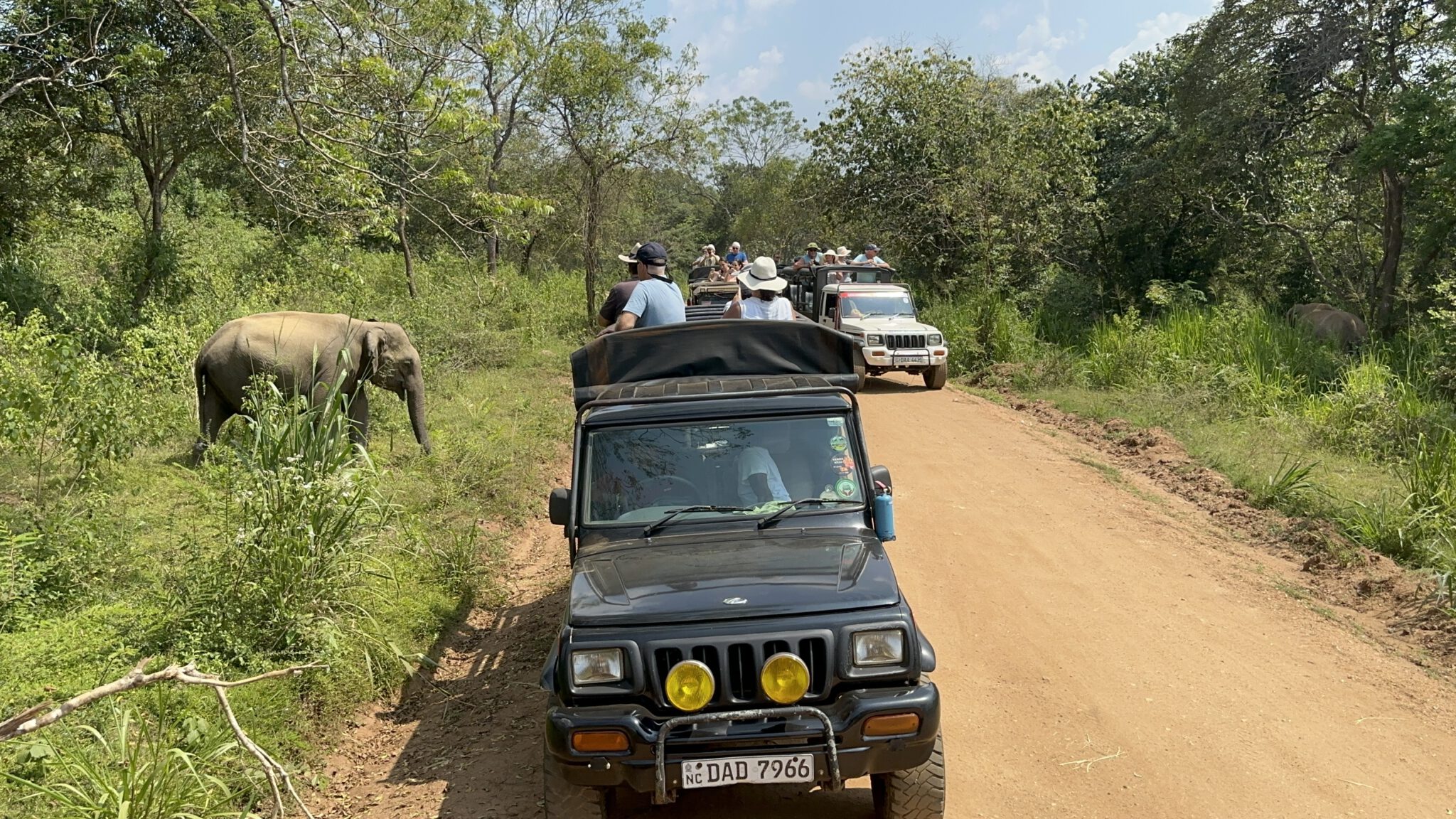
Elephants in the grass, buffalo in the water, cobras on the path and the practical things we learned from our own jeep safari.
Transparency notice / disclaimer: This article contains affiliate links. If you book a tour via these links, I will receive a small commission – there are no additional costs for you. By doing so, you support my travel blog and help me to continue providing helpful tips and content. Thank you very much!
Hurulu Eco Park Safari
Our Video
If you would like to see everything on video, then take a look at our YouTube video:
What We Paid
We booked the safari through our homestay and paid LKR 15000 in total (about US$50 / EUR 44). Of that amount LKR 5000 (about US$17 / EUR 15) was for the guide. We cannot reliably split the remaining amount into jeep and entry fees.
Before booking
- Confirm pickup and drop-off from your exact accommodation in Sigiriya or Habarana.
- Ask whether the quoted total includes the jeep, park admission, driver or guide, taxes and any waiting time.
- Confirm the chosen park, meeting time, duration, group size and cancellation terms. Wildlife movements and weather can change the plan.
- Ask whether the driver follows official roads and avoids blocking or pressuring elephants for a close photo.
Pack for the drive
- Bring water and sun protection
- A camera zoom or binoculars helps when an elephant is back in the grass, but a phone is enough for the wider jeep experience.
- Keep bags and loose items secure on bumpy tracks.
- Do not feed wildlife, play sounds to attract it, or ask anyone to move closer than is safe.
Book Your Safari
Here we have some tours for you that you can book with trusted providers.
Provider: GetYourGuide
Hurulu Eco Park Safari
Click here
Hurulu Eco Park Jeep Safari with Entrance Ticket Included
Click here
Hurulu Eco Park : Private Elephant Safari with Wildlife Expert
Click here
Provider: Viator
All Sigiriya Tours & Excursions in 2026
Click here
From Searching to Spotting
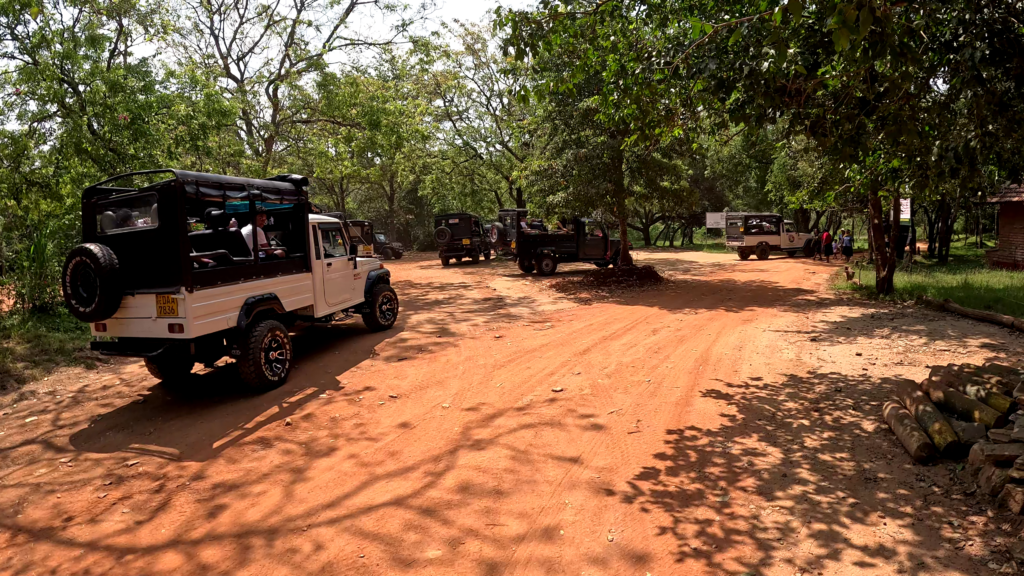
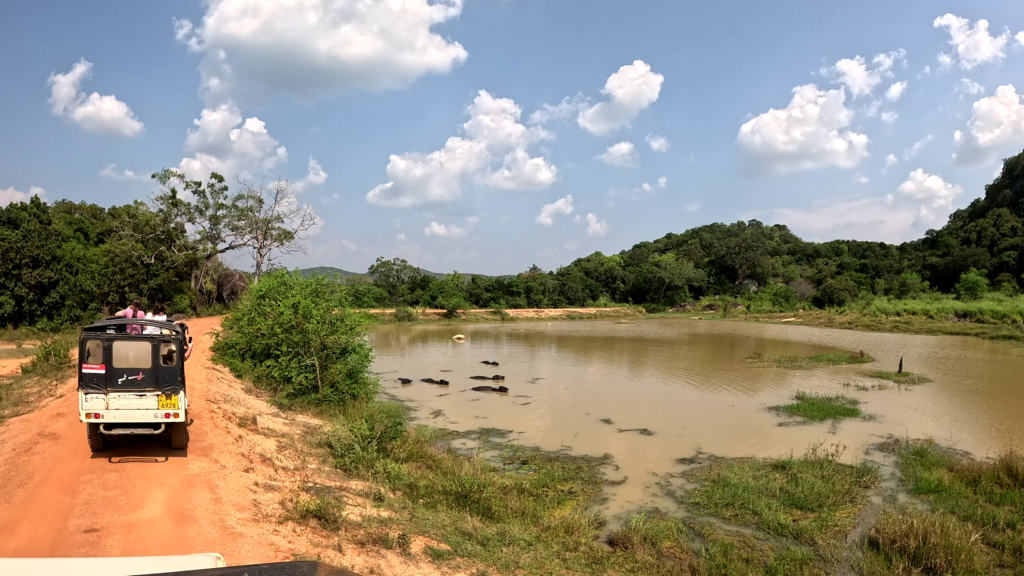
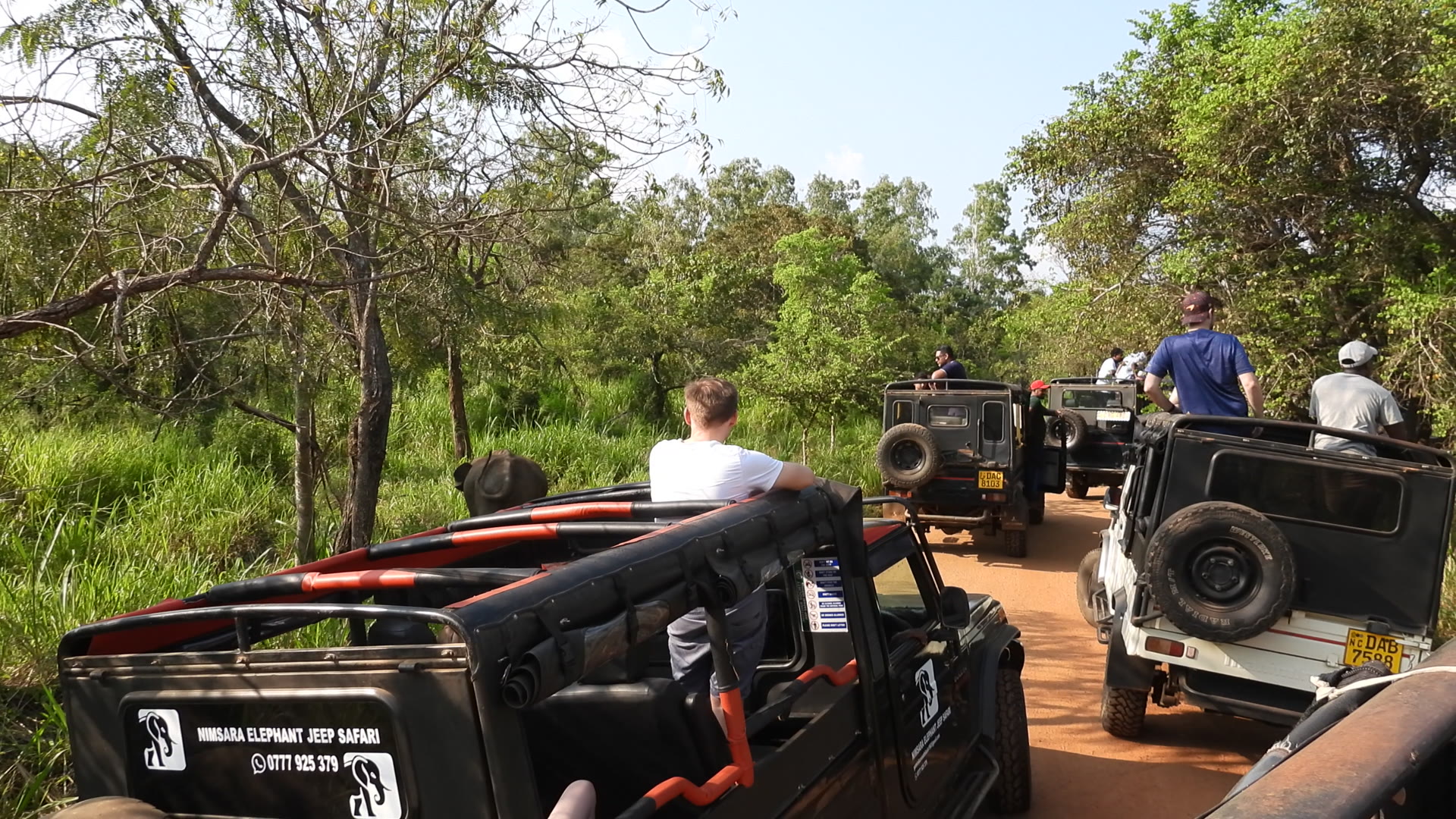
We climbed into an open safari jeep and travelled toward Hurulu. Before the first sighting, there was the familiar mix of anticipation, heat and watching the vegetation for movement. We had to wait a few minutes to get a ticket at the ticket counter but our guide, who was arranged by our homestay, managed everything for us.
The First Elephant
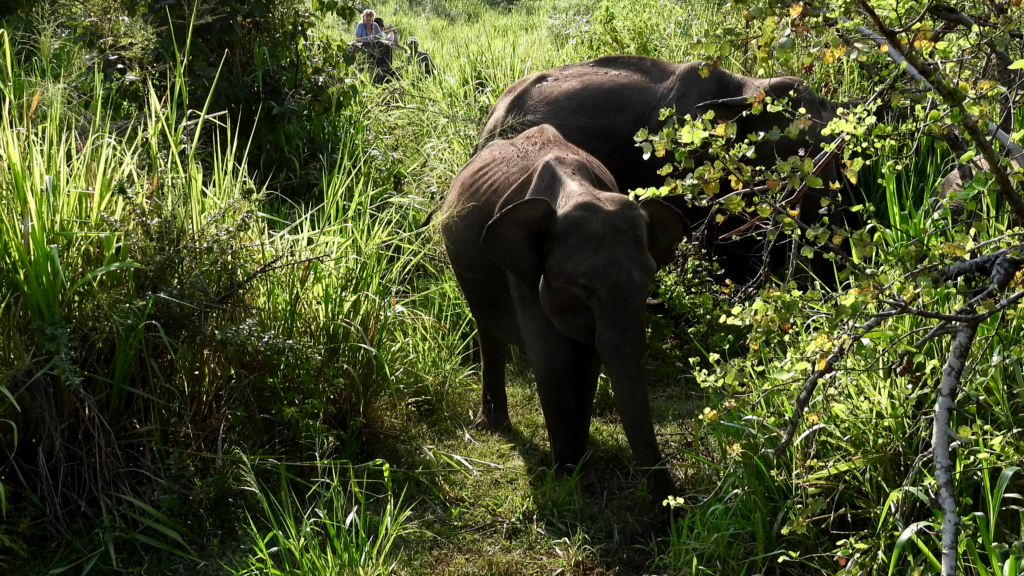
The first elephant was not waiting in a wide-open clearing. It appeared between tall grass and branches. Then we noticed another. Suddenly everyone in the jeep was looking in a different direction.
This guide separates what we experienced in April 2025 from information you should check again before booking. We do not know what a safari will look like on your day.
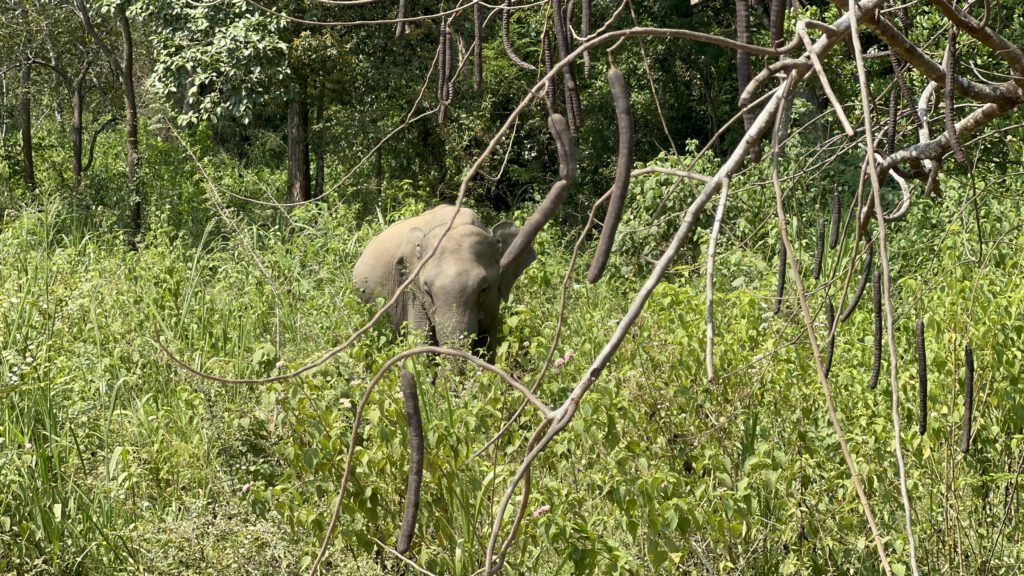
Once the first elephant appeared, the quiet search became a series of stops and new angles. Some animals were close; others were partly hidden in the scrub. That was exactly how the place felt.
The Elephants made the Day
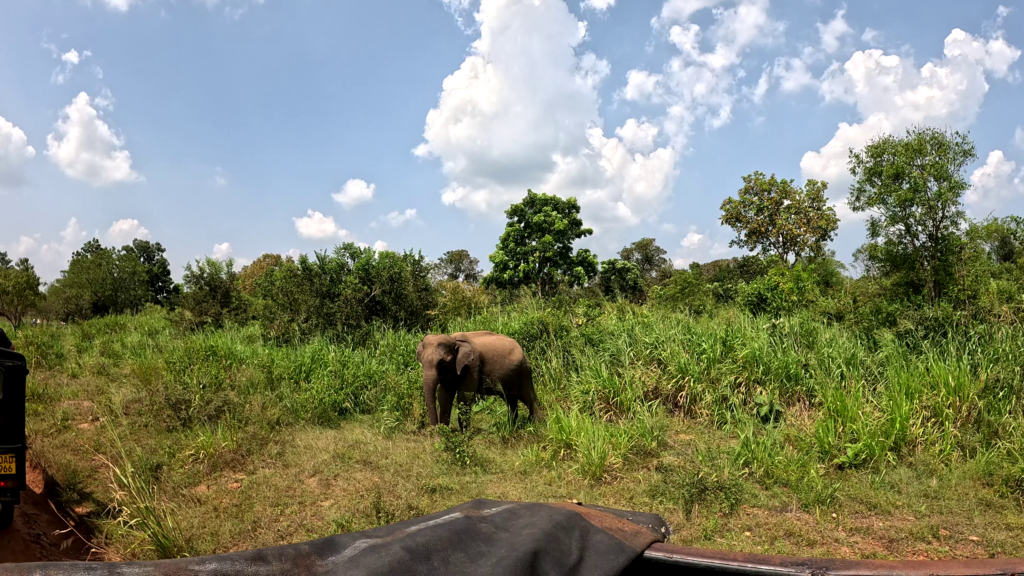
Hurulu’s high grass makes you work for a sighting. An ear moves, then a trunk and only then do you realise how much of the animal was there all along. The jeep footage captures the movement and reactions. Our longer-lens photographs show the details we could not see as clearly with a wide camera.
- We saw wild elephants feeding and moving through thick vegetation.
- Some views were brief or obscured. Keep expectations flexible rather than planning around one perfect photograph.
- Stay in the jeep, give animals space and ask the driver not to leave official tracks or crowd a sighting.
We also found it worth looking away from the elephants occasionally. The buffalo and small reptile moments gave the afternoon a different pace.
Slow down at the Water
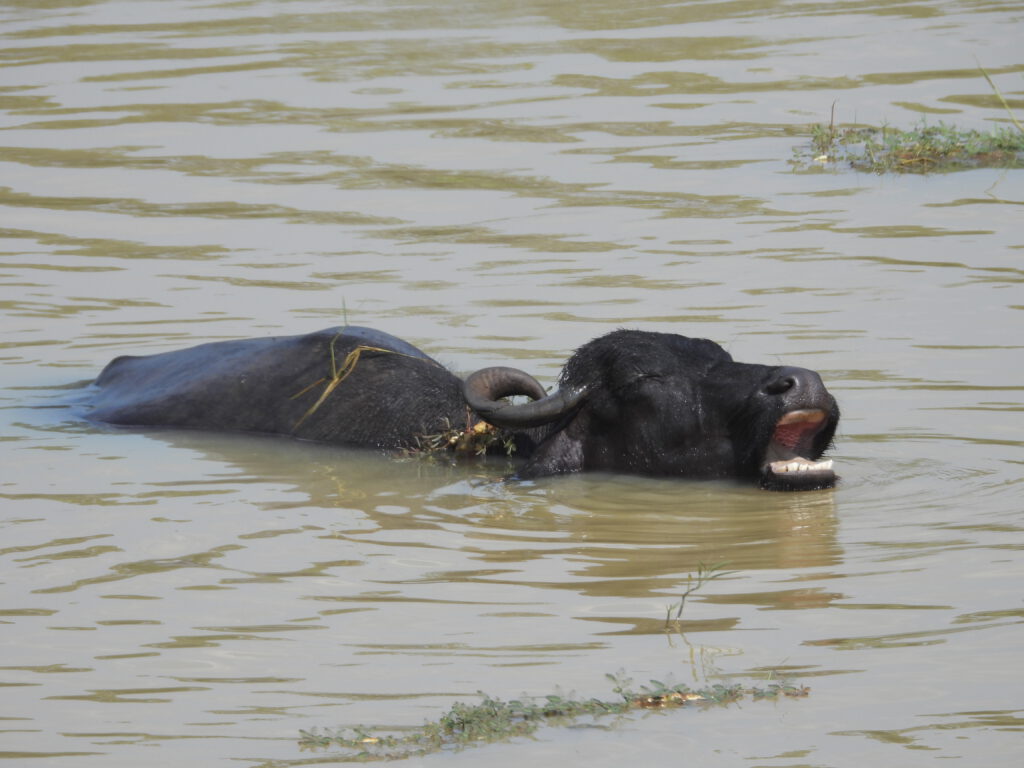
At a water area we watched buffalo with only their heads and backs above the surface. Compared with the searching and pointing around elephants, this was a slower scene. We also filmed a lizard in the vegetation. Neither moment needs to compete with the elephant footage. Together they make the safari feel like a place rather than an animal checklist.
These are sightings from our visit, not a list of species you are guaranteed to see. We would not book Hurulu expecting a leopard and we would not promise an elephant count.
Cobra on the Path
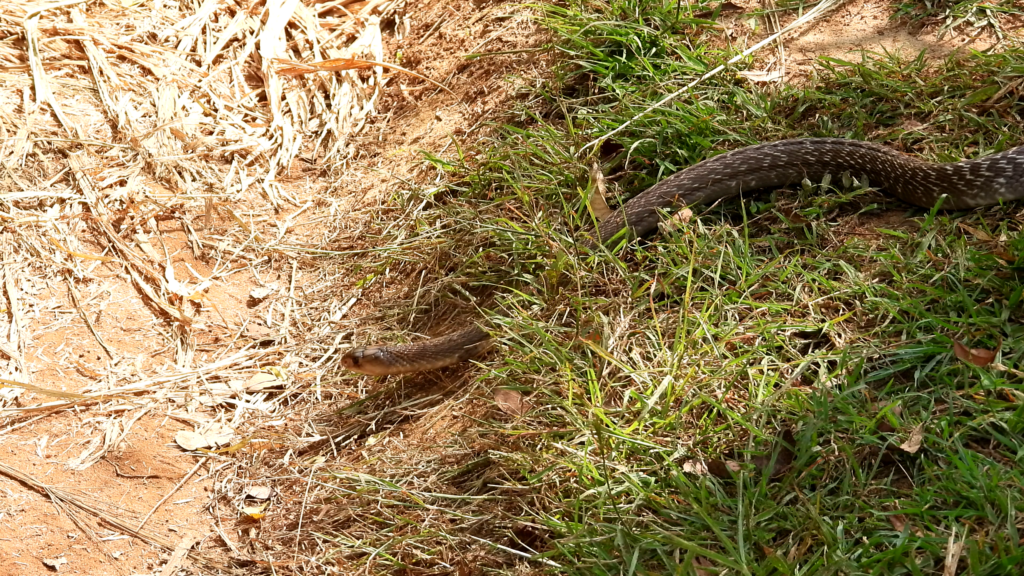
This was one of the rarest sighting we had at Hurulu Eco Park. Our guide told us he can hear a snake and just one minute later it crossed the road.
The Place behind the Footage - What is Hurulu Eco Park?
Hurulu Eco Park is in the dry-zone forest landscape near Habarana. It is not the same thing as Minneriya or Kaudulla National Park.
A wider protected landscape
UNESCO lists the wider Hurulu Biosphere Reserve in its Man and the Biosphere Programme, nominated in 1977 and describes it primarily as tropical dry evergreen forest. The safari area is a visitor-accessible part of the broader Hurulu forest landscape. A UNESCO label is not a promise that every corner is open to tourists.
Who manages the park?
Sri Lanka’s tourism visitor-management report identifies Hurulu Eco Park as part of the Hurulu Conserved Forest under the Department of Forest Conservation. That differs from nearby national parks administered by the Department of Wildlife Conservation. The report says visits require an organised tour and driver.
The practical questions to ask first
We would check the details of the specific safari before paying, particularly what the price includes and how the driver handles wildlife sightings.
Which park will we actually visit?
Ask the operator to name the park on your booking, especially if they offer Hurulu, Minneriya and Kaudulla as alternatives. If the plan changes on the day, ask why and whether the price changes too.
Is the jeep private or shared?
Confirm how many guests will be in the vehicle, whether everyone gets a clear view and whether the driver can pause when you spot something. A lower price may mean sharing the jeep.
How much time is actually inside the park?
Get the pickup time, return time and expected time in the park. A quoted tour duration may also include the drive from your stay and the stop at the entrance.
We were 3 hours in the park and that was absolutely enough for us.
Do we have both a driver and a guide?
Our homestay booking included a guide as a separately identified part of the total price who was also the driver. Ask whether your offer includes a guide in addition to the driver, what language they speak and whether that changes the quote.
What happens if it rains or the park changes?
Check the cancellation and rescheduling terms before you pay. Also ask what happens to your booking if the operator recommends another park because of weather or recent elephant movement.
What should we bring in the jeep?
Bring water, sun protection and a layer or bag that can handle dust. A zoom lens or binoculars helps with animals hidden in grass. Secure loose belongings before the track gets bumpy.
The Plan After The Safari
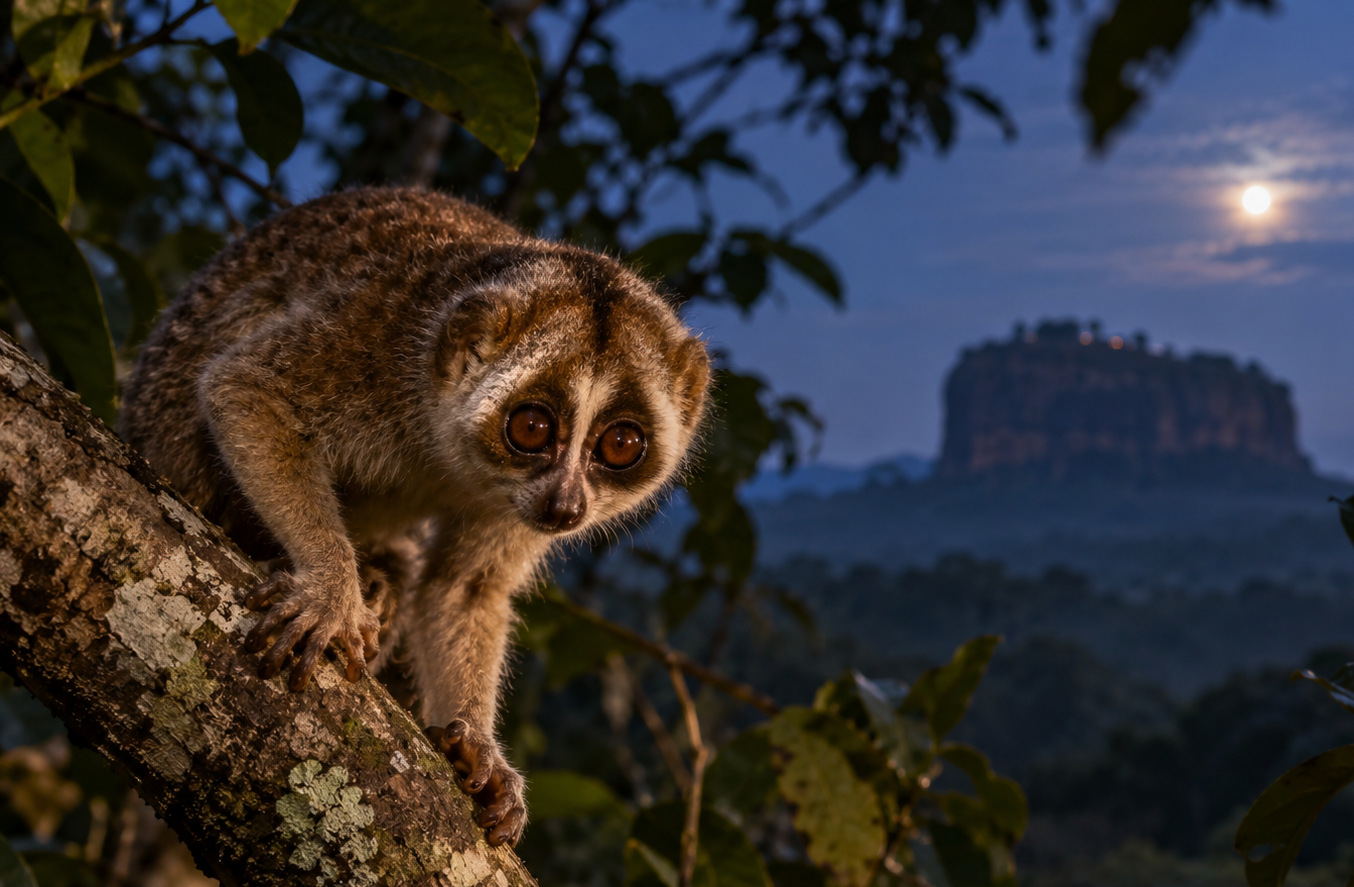
We had planned a guided jungle walk to look for lorises later that evening. The weather turned bad and the tour was cancelled. It was disappointing, but it is also an important part of the real trip. We cannot review that guide, describe a sighting or tell you the walk was worth the money, because we never went.
Keep an evening wildlife plan flexible, check the forecast and cancellation rules and pick an operator who treats nocturnal animals carefully. The first is the tour we had booked and where we got the money back from after cancellation.
Provider: GetYourGuide
Night Hike to see Elusive & Rare Loris in Sigiriya
Click here
Sigiriya: Night Safari, Fireflies & Wildlife Private Tour
Click here
Provider: Viator
All Sigiriya Tours & Excursions in 2026
Click here